
Start your wedding seating plan with the relationships that need care: who must sit apart, who needs a familiar companion and which relatives expect a place near the couple. Build the remaining tables around those decisions.
For a Singapore wedding involving divorced parents, blended families or relatives who no longer speak, a workable arrangement gives people dignity without forcing closeness. The aim is a comfortable celebration, with fewer opportunities for old disagreements to interrupt it.
Agree on Boundaries Before Assigning Tables
As a couple, decide which requests are preferences and which are firm boundaries. An aunt wanting to sit with cousins is different from someone needing distance from a relative who has repeatedly mistreated them.
Create a private planning list with three categories:
- Keep together: partners, caregivers and guests who rely on each other.
- Keep apart: people whose shared table could cause distress or confrontation.
- Flexible: guests comfortable joining several possible groups.
Record practical instructions rather than family histories. “Separate tables; check before moving” gives your coordinator something useful to follow. Avoid labels such as “difficult parent”, especially in documents others might see.
Where someone has threatened or harassed another guest, settle attendance and boundaries first. A different table alone cannot resolve that situation.
Ask Sensitive Questions Privately
Speak individually to relatives whose arrangements need discussion before showing anyone a draft. Ask specific questions: “Would you be comfortable sharing a table with Dad and his partner?” is more useful than “Will everyone behave?”
Offer workable choices within your boundaries. For example: “Would you prefer sitting with your siblings or with Grandma?” Avoid inviting each person to redesign the entire room.
Then communicate the decision calmly: “We’ve arranged separate family tables so you can each sit with people you enjoy. Both tables will have a clear view.”
Do not relay one parent’s complaints to the other. Confirm seating details without turning the planning process into an argument conducted through you.
Choose a Family Table Arrangement That Fits
A single VIP table may create unnecessary pressure when several parents and stepparents expect recognition. Consider these arrangements as starting points, subject to your venue’s layout:
| Family situation | Suggested arrangement |
| Divorced parents comfortable together | Shared family table, with partners included as agreed |
| Parents who prefer distance | Separate family tables with comparable views and access |
| Several parental households | Couple-only table, with each household seated among supportive relatives |
| Estranged siblings or relatives | Separate table groups, with space between them where possible |
Compare the experience at each table, including proximity to speakers, visibility and walking routes. Matching table numbers or distances means little if one parent sits behind an obstruction.
For example, seat Mum with her partner and siblings on one side of the room, and Dad with his partner and familiar relatives on the other. Keep both comfortably connected to the celebration without placing them on adjacent table edges.
Include Stepparents Without Creating a Ranking
When a stepparent or parent’s partner is invited, plan their seat alongside that parent unless they prefer otherwise. Separating them merely to recreate an earlier family arrangement can make the welcome feel conditional.
Decide how to include grandparents, adoptive parents and relatives who raised you based on your actual relationships. A place near the couple can recognise care and involvement without requiring everyone to share one table.
Use neutral table numbers or names. Labels such as “main family” and “other family” turn a practical arrangement into a public hierarchy. Keep explanations off the displayed seating chart.
Adapt Seating to Your Wedding Traditions
For your Singapore celebration, clarify what each family means by “VIP seating”. They may have different expectations about elders, parental households or proximity to the stage. Ask which customs matter to them instead of assuming one arrangement fits everyone.
Where your programme includes solemnisation, a nikah or a tea ceremony, plan those positions separately from dinner seating. Confirm space for ceremony participants with the person conducting it, then decide where other relatives will sit.
Give guests clear directions when seats change between events. Also agree on separate family photo groupings where needed, so carefully considered dinner seating is not undone by an unexpected request for everyone to gather together.
Check Comfort and Movement on the Floor Plan
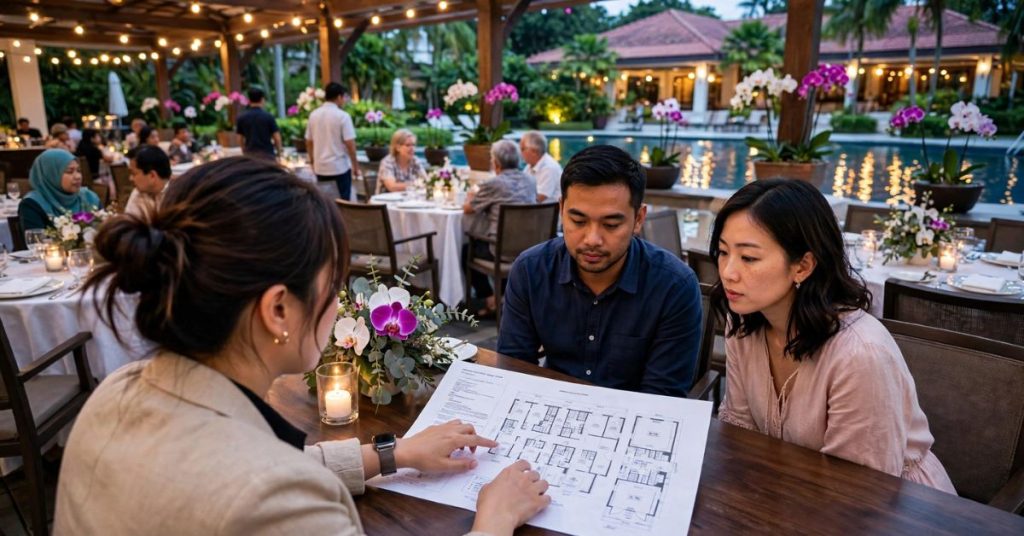
Ask for the actual room plan before finalising names. Two tables may look well separated on paper yet share a narrow route to the buffet or exit.
Check entrances, dining routes, toilets and the path to the stage. Seat guests with mobility needs where they can move comfortably, alongside their chosen companion. Allow space for a wheelchair or high chair rather than treating either as an ordinary spare seat.
Keep older relatives away from loudspeakers where possible and ensure they can see the proceedings. Royal Palm’s guide to wedding guest comfort highlights seating, accessibility and clear circulation as practical planning priorities.
Within each table, consider shared language and familiar company. Avoid making one bilingual cousin responsible for translating every conversation or expecting a teenager to keep feuding adults civil.
Give the Final Plan a Clear Owner
Set your RSVP deadline early enough to resolve missing replies before the venue’s final headcount and seating deadlines. Keep these tasks alongside your wider arrangements using the wedding planning checklist for Singapore couples.
Assign one trusted person to approve changes on the day. Give reception helpers the current guest list and table assignments; share sensitive restrictions only with those who need them.
At sensitive tables, use individual place cards as well as table assignments. Brief ushers on where to guide guests and whom to contact if someone objects. Agree on a response such as: “Let me check the seating plan with the coordinator.”
Identify acceptable alternative seats in advance, within the venue’s agreed capacity. Any move must preserve separation, companions and meal arrangements. An empty chair is not automatically a suitable replacement.
Frequently Asked Questions
Should children sit between separated parents?
Avoid using children as a buffer. Seat younger children with the adult responsible for them during the meal, and ask older children what feels comfortable.
Can a parent who pays insist on choosing the seating?
Discuss expectations attached to financial contributions early. Listen to their preferences, but agree as a couple that payment does not override a guest’s safety or necessary boundaries.
Should we send everyone the seating chart beforehand?
Usually, individual confirmations are enough. Tell affected relatives about sensitive arrangements privately and reserve the full working plan for your coordination team.
Can single relatives sit with couples?
Yes. Group them by friendship, language and interests. Avoid a leftover singles table or seating someone beside a potential match without their agreement.