
Booking a wedding venue is one of the biggest decisions in the entire planning process because it shapes almost everything that comes after it: your guest count, menu, ceremony format, budget, timeline, and even the kind of experience your families will remember. In Singapore, that decision can get even more layered. Venue packages often come with very different minimum guest counts, some dates attract surcharges, off-site solemnisations require the right legal arrangements and for many couples, halal certification or cultural compatibility is not optional but essential.
That is why the smartest couples do not start with “Is this place pretty?” They start with sharper questions: Will this space actually fit our wedding style? What will the final bill really look like? Can the venue handle our ceremony and banquet flow smoothly? Does it suit our family’s dietary, religious, and practical needs? Asking those questions early can save you from costly changes, awkward compromises and contract surprises later.
Ask whether the venue truly fits your wedding
A venue can look beautiful online and still be the wrong fit in real life. Before anything else, ask the venue what kind of wedding it handles best. That matters because wedding packages in Singapore can vary dramatically by format and scale. Royal Palm @ OCC, for example, lists different packages for solemnisations, themed wedding celebrations, and ballroom formats, with minimum guest counts ranging from 50 for certain solemnisation packages to 250 or even 1,000 for larger-format packages. In other words, available does not automatically mean “suitable.”
Capacity, layout, and ceremony flow
Your first real question should be: How many guests does this space hold comfortably for my exact setup? Not just standing, not just in theory, and not just based on a brochure. Ask whether the quoted capacity is for a sit-down banquet, buffet-style reception, solemnisation setup, or cocktail format. Also ask whether the room still feels spacious once you add a stage, VIP tables, a photo booth, or other wedding elements. Singapore venue listings often show how much these details matter, because the same venue may advertise different capacities, minimum spends, dining formats, and ceremony options depending on the space used.
If you plan to hold both your solemnisation and reception at the same venue, ask how the flip between setups is managed. Can the ceremony happen in the same room without making guests wait too long? Is there a holding area for family members? Can the venue team manage the transition, or will outside vendors need extra time and manpower? These are the questions that affect whether your wedding feels calm and well-paced or rushed and fragmented. Royal Palm’s wedding page is a useful reminder here: venues that already offer both wedding and solemnisation formats are often better placed to explain how the day can flow from one segment to the next.
Date flexibility and package thresholds
Your next question should be: What happens if my guest count changes or my preferred date shifts? This is especially important in Singapore, where venue pricing can be tied to minimum table counts, minimum spend, or fixed package thresholds, and where popular or auspicious dates may carry surcharges. A venue may look affordable when you first see the advertised rate, but the economics can change once you factor in the minimum commitment attached to your date or package.
A practical example: if you expect 180 guests, a venue package built around much larger minimums may force you into paying for more than you need. On the other hand, if your guest list grows after family discussions, an intimate venue may suddenly become tight or require a layout compromise. So ask the venue directly whether they allow you to scale up or down, switch rooms, or adjust packages without penalty. That one conversation can save you from rebuilding your wedding plan halfway through.
Get clear on cost and contract terms
This is the section couples most often underestimate. A venue quote is not the same thing as your final venue bill. In Singapore, wedding publications regularly warn couples about extra charges such as service charges, GST, corkage, overtime, and equipment rentals that may only become obvious later if the package is not clearly broken down. Contracts should also spell out payment schedules, cancellation terms, and what is actually included.
The key is to stop asking only, “What is the package price?” and start asking, “What will I pay in the end if I run my wedding the way I want?” That means checking whether the quoted price includes AV support, décor basics, bridal room access, food tasting, service staff, cleanup time, and extra hours if the event overruns. If you plan to bring your own wine, desserts, or cultural elements, ask whether corkage or handling charges apply. If the venue promises special perks verbally, ask for every one of them to be reflected in writing before you pay the deposit.
Useful contract questions to ask before signing:
- What is included in the base package, and what is charged separately?
- Are service charges, taxes, overtime, corkage, and equipment rental included or added later?
- Is there a surcharge for popular, auspicious, or eve-of-public-holiday dates?
- What deposit secures the booking, and when are the remaining payments due?
- What happens if we postpone, reduce our guest count, or cancel?
- Can our minimum spend or package tier be revised if our headcount changes?
- Will all agreed perks and waivers appear in the contract?
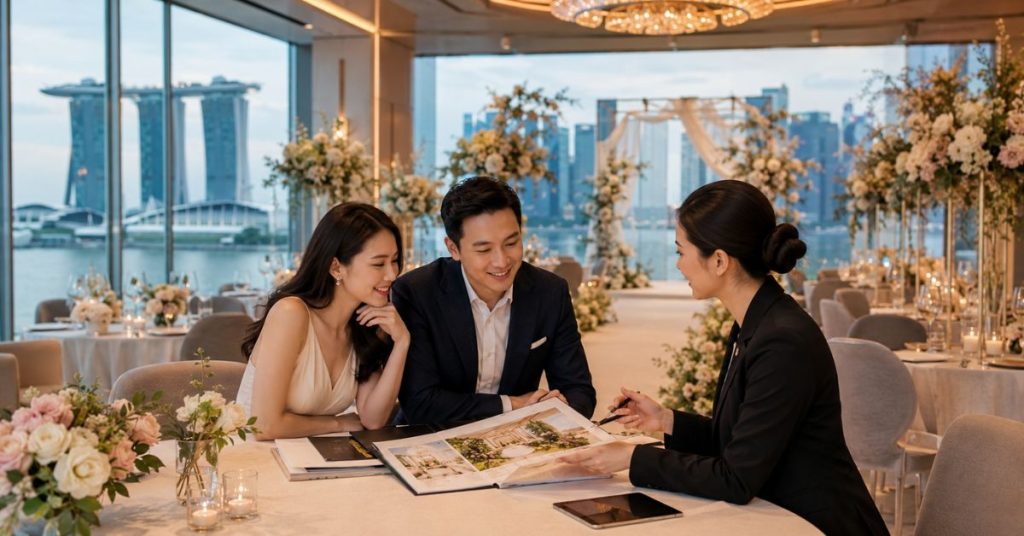
Check guest experience, food, and ceremony logistics
A wedding venue is not only for the couple. It also has to work for grandparents, children, relatives arriving late, guests who drive, and friends who depend on public transport. That is why accessibility deserves a proper conversation. Singapore-based wedding advice frequently highlights parking availability, transport convenience, and traffic patterns as real decision factors, especially for weekend evenings. If most of your guests are driving, ask how many complimentary parking lots are available, whether overflow parking is nearby, and how far guests will need to walk. If many are taking public transport, ask how straightforward the last stretch is from the nearest station or drop-off point.
Food needs an equally direct conversation. If halal dining matters, do not settle for vague language like “Muslim-friendly.” In Singapore, MUIS is the authority that provides halal certification and maintains the official directory for halal-certified eating establishments. Some local venue listings also make clear that couples should check not just cuisine type, but whether the kitchen is halal-certified, whether halal menus are available, whether external catering is allowed, and whether special arrangements such as ritual cleansing support exist. Royal Palm, notably, presents itself as MUIS halal certified and positions its wedding offerings around multiple cultural themes and requirements.
Legal and operational details matter too. If you are solemnising outside the Registry of Marriages, Singapore’s official marriage guidance says you need to invite a licensed solemniser and prepare the relevant details for the venue, witnesses, and ceremony. So ask the venue whether they are familiar with off-site solemnisation flow and whether they have a quiet, appropriate setup for the signing itself. If you plan a live band, performances, or amplified entertainment, ask whether the venue’s approvals already cover that arrangement, because a Public Entertainment or Arts Entertainment licence may be required unless exempted.
Bring this checklist to your site visit
A site visit should do more than confirm that the ballroom looks nice. It should help you pressure-test the venue before money changes hands. If you are shortlisting spaces, bring questions like these and take notes on the answers.
- How many guests does this room hold comfortably for my exact wedding format?
- Can the venue host both the solemnisation and the reception without a stressful room flip?
- What is the minimum spend or minimum guest commitment for my preferred date?
- Are there date-based surcharges for weekends, public holidays, or popular wedding dates?
- What is included in the package, and what usually gets billed separately?
- What are the rules on corkage, external vendors, custom décor, and overtime?
- Is the food halal-certified, halal-menu only, or non-halal with alternatives?
- How are dietary requests, elderly guests, wheelchair access, and child-friendly needs handled?
- How many parking lots are available, and how easy is arrival by public transport?
- If we plan live entertainment, speeches, or a larger sound setup, are there any restrictions or licence issues?
- What happens if our headcount drops, our date changes, or we need to postpone?
- Will every perk, waiver, and special promise be reflected in the final contract?
One useful tip: tour the venue at roughly the same time your wedding would happen. That gives you a much more realistic sense of lighting, traffic, guest arrival flow, and how comfortable the space feels when it is actually in use. In a city like Singapore, where convenience and timing can shape guests’ experience more than couples expect, this small step can make your shortlist much stronger.
Final thoughts
The best wedding venue questions are not the ones that impress a sales coordinator. They are the ones that protect your budget, your guest experience, and your peace of mind. In Singapore, the right venue is rarely just the prettiest one. It is the one that matches your headcount honestly, explains its pricing clearly, respects your cultural and food requirements, supports your ceremony format, and puts important promises in writing.
For couples comparing options, Royal Palm @ OCC is a good example of why this level of questioning matters: the venue publicly highlights planner support, customizable wedding packages, multiple cultural themes, solemnisation options, and different package scales. That kind of detail helps couples ask better questions from the start, which is exactly how smarter venue decisions are made.
FAQs
How early should we book a wedding venue in Singapore?
Book as soon as your preferred date, estimated guest count, and wedding format are reasonably clear. Popular or auspicious dates can come with surcharges and limited availability, and package thresholds can differ a lot from one venue to another.
What hidden venue costs should we ask about?
Ask specifically about service charges, taxes, corkage, overtime, equipment rental, and any charges that apply if your event runs longer than planned. Those are among the most common cost surprises couples face.
If we want to solemnise outside ROM, what must we confirm?
Make sure you have an external licensed solemniser and that your venue, timing, and witness details are properly prepared for the marriage process. This should be confirmed early, not at the last minute.
How do we check whether a venue is really halal-certified?
Use the official MUIS halal resources and verify the establishment through the halal-certified establishments directory. If halal dining matters to your family, ask the venue to show the current certification for the exact premises involved.
Can we bring our own caterer, décor team or other vendors?
That depends entirely on the venue. Some Singapore venue listings clearly state whether external catering is allowed, whether only certain menus are available and what support is included, so always ask this before paying a deposit and make sure the answer appears in the contract.