
Choosing between a ballroom wedding and an intimate ceremony is not just a style decision. It affects your budget, guest list, family expectations, timeline, and even how the day feels when you walk into the room. In Singapore, wedding planning guides consistently point couples back to the same foundation: decide the kind of wedding you want, estimate your head count early, and choose a venue that fits both your priorities and your practical limits. That is because guest count influences almost everything else, from venue size to catering, invitations, styling, and floral spend.
This is where many couples get stuck. One partner may picture a grand entrance, a full banquet, and a packed room of relatives and friends. The other may want a quieter ceremony with only the people who are part of daily life. Neither option is automatically better. The right choice is the one that matches your relationships, your budget comfort level, and the experience you want your guests to have.
For couples planning in Singapore, the smartest way to approach this choice is to think beyond “big versus small.” Instead, ask a more useful question: What wedding format lets us celebrate meaningfully without creating unnecessary pressure? That mindset leads to better decisions on venue, guest list, and package selection.
What a ballroom wedding does best
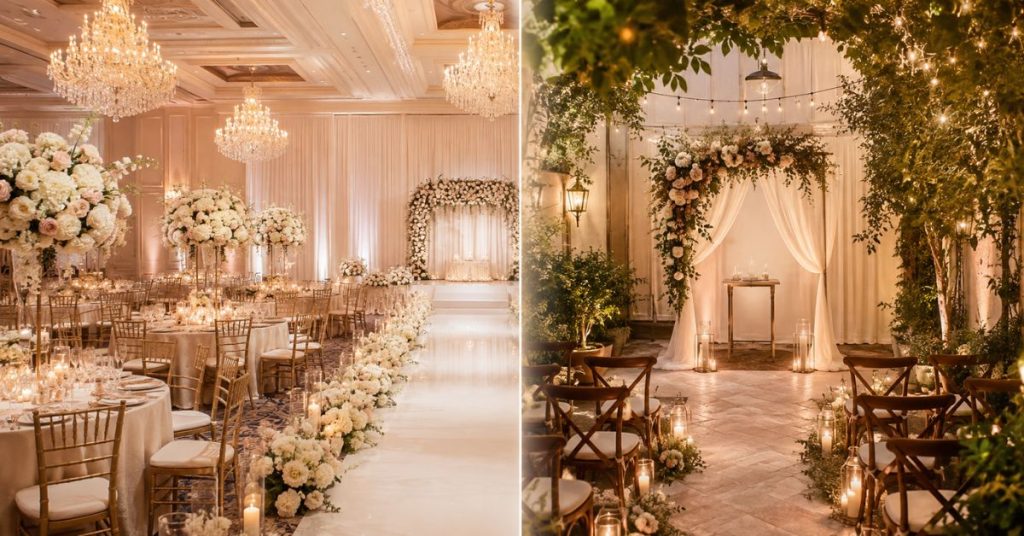
A ballroom wedding works beautifully when the celebration is meant to feel ceremonial, social, and inclusive. It suits couples with large families, broad social circles, or cultural expectations that make a larger turnout important. It also gives you room for a fuller wedding program: welcome drinks, procession, stage moments, speeches, entertainment, and a banquet-style dining experience. Royal Palm @ OCC, for example, positions itself as a venue for both intimate family events and large-scale celebrations, and it’s gallery shows multiple room formats, including a Grand Ballroom with seating for 120 tables.
When a ballroom wedding is usually the better fit
- You already know your non-negotiable guest list is large, or both families expect a broader invitation circle. Singapore wedding planners commonly advise couples to establish a rough head count before venue hunting precisely because venue capacity can quickly become the deciding factor.
- You want the wedding to feel like a major family occasion rather than a private milestone. A ballroom setup naturally supports formal entrances, table seating, emcee-led flow, and a more “event” style atmosphere.
- You value scale and visual impact. Larger rooms create more room for dramatic decor, stage design, and coordinated guest experience. Royal Palm’s venue materials specifically emphasize customizable layouts, formal banquet setups, and large-capacity spaces for weddings and grand celebrations.
What couples sometimes underestimate about ballroom weddings
The appeal of a large wedding is obvious, but ballroom celebrations can become expensive in quiet ways. More guests mean more food, more decor coverage, more invitations, and often more pressure to upgrade details so the room does not feel underdressed. Singapore wedding guidance also notes that weekends and popular or auspicious dates are usually more expensive, while wedding lunches can be more budget-friendly than dinners.
There is also a people-management factor. A larger room does not just accommodate more guests; it can also encourage more additions to the guest list. That often means parents, in-laws, colleagues, and extended family all expecting seats. If you already sense tension around who “must” be invited, a ballroom wedding can either solve the problem by creating space, or make it worse by inviting even more negotiation.
Where an intimate ceremony feels stronger
An intimate ceremony shines when the couple wants closeness, calm, and genuine interaction. Instead of trying to host everyone they know, the couple can focus on the people they truly cannot imagine getting married without. Singapore wedding advice often recommends building the list from that inner circle first: parents, siblings, grandparents, close relatives, and the closest friends. That logic naturally favors a smaller ceremony.
Intimate weddings also change the emotional rhythm of the day. Couples usually spend more time with each guest, the ceremony tends to feel less performative, and small details matter more because guests actually notice them. If your idea of a great wedding includes long conversations, a relaxed pace, and fewer obligations, intimacy is not a compromise. It is the format that protects the mood you want.
When an intimate ceremony is often the stronger option
- You want to prioritize connection over spectacle and actually spend time with the people attending.
- You have a tighter budget but still want a polished guest experience. Singapore wedding planning advice notes that a smaller guest list lowers the banquet bill and can free up money for things couples value more, whether that is styling, photography, or a more premium menu.
- You prefer a flexible, low-pressure format, such as a solemnisation followed by a meal, instead of a full banquet with rigid sequencing. Royal Palm’s wedding page, for instance, includes solemnisation options from 50 persons onward, which reflects how venues increasingly support smaller-format celebrations as well as large ones.
That said, intimate weddings require firmness. If you choose a small ceremony without a clear guest policy, you can end up in the hardest version of planning: not large enough to include everyone, but still large enough to offend people who expected an invite. Plus-ones and parent allocations need to be defined early and applied consistently.
The practical questions that should decide the format
Start with the guest list you cannot avoid
Before you think about decor, menus, or packages, identify your essential guests. This is the list that tells you whether intimacy is realistic or whether a ballroom makes more sense. If your must-have list already stretches far beyond close family and closest friends, forcing a small ceremony may create more stress than savings. Singapore wedding guidance is clear on this point: start with essential people, estimate a realistic head count, and shortlist venues based on that figure.
Let budget shape the size, not the other way around
A common mistake is to fall in love with a wedding style first and work backward later. In reality, cost tends to follow head count. The more people you host, the more you spend not only on food, but also on florals, invitations, room styling, and the extras that make a bigger setup feel complete. If you are budget-sensitive, a smaller wedding often gives you more control. You can also reduce costs by considering a weekday date or lunch reception rather than a dinner on a popular date.
Be honest about family dynamics
Some couples truly want a small wedding. Others want a small wedding because they are hoping to avoid difficult conversations. Those are not the same thing. If parents are contributing financially or have strong expectations around invitations, you need to discuss seat allocation early. Wedding planning advice in Singapore suggests agreeing on a guest count split before the list starts expanding, especially when families differ in size or social obligations.
Match the format to the experience you want guests to remember
If you want guests to remember the atmosphere, stage moments, and sense of occasion, a ballroom format supports that naturally. If you want them to remember how personal the day felt, how unhurried the ceremony was, and how present you were with them, intimacy usually wins. Royal Palm’s venue content is useful here because it shows a venue can support both approaches: from smaller suites and foyer spaces to a large ballroom, with customizable layouts and packages for different wedding styles.
How to choose a venue that keeps your options open
The best venue is not always the biggest or the prettiest. It is the one that matches your guest count, service needs, and cultural expectations without forcing you into a format that does not fit. When reviewing venues in Singapore, ask about minimum spend, minimum tables or head count, and maximum capacity before you get emotionally attached. Wedding venue guidance specifically recommends this because many spaces require a minimum commitment to secure exclusive use.
For this reason, flexible venues can be especially valuable. Royal Palm @ OCC is a good example of a venue built around range rather than a single wedding type. Its website says it caters to gatherings from intimate family events to large-scale celebrations, offers customizable wedding packages, supports multiple cultural wedding themes, and has several room options including the Grand Ballroom, Sapphire Suite, Tee Garden Foyer, and Emerald Suite. It also notes a 350-seat main restaurant and poolside area, wedding planning assistance, halal dining, and a location within walking distance of Yishun MRT, with shuttle service listed during part of the day.
Questions worth asking before you sign
- What is the realistic guest capacity for the exact room you want, not just the overall venue?
- Is there a minimum spend or minimum head count to secure the space privately?
- Can the layout shift between solemnisation, dining, and mingling, or is it fixed? Royal Palm explicitly highlights personalized layouts and customizable packages, which is the kind of flexibility couples should look for.
- Does the venue support your cultural and dietary needs comfortably, rather than as an afterthought? Royal Palm states it handles different cultural wedding themes and offers halal options, which matters for many Singapore couples planning for mixed family and guest expectations.
The best choice is the one that feels sustainable, not impressive
A ballroom wedding is right when your celebration is meant to gather a wider circle, honor family expectations, and create a formal, high-energy atmosphere. An intimate ceremony is right when you want emotional closeness, more time with each guest, and tighter control over the budget and pace of the day. The mistake is not choosing one over the other. The mistake is choosing a format that looks appealing on paper but creates strain in real life.
The direction Singapore weddings are moving toward is not simply “bigger” or “smaller,” but more intentional. Couples want venues that can adapt, packages that are not one-size-fits-all, and celebrations that reflect how they actually live and relate to people. That is why flexible venues continue to matter. When a venue can support both a solemn, close-knit ceremony and a larger-scale celebration, you do not have to force your wedding into the wrong shape.
FAQs
Is a ballroom wedding always more expensive than an intimate ceremony
Usually, yes, because more guests increase catering and often raise styling, floral, and invitation costs too. In Singapore, smaller guest lists are widely recommended for couples trying to keep spending under control.
How many guests should we estimate before choosing a venue
You do not need a final list, but you should have a realistic rough head count before venue hunting so you do not choose a space that cannot fit your must-invite guests.
Can an intimate wedding still feel special
Absolutely. A smaller ceremony often feels more personal because couples can spend more time with each guest and invest in details that will actually be noticed.
What if our families expect a larger wedding than we want
Discuss seat allocation early, especially if parents are contributing financially or have their own guest expectations. Clear boundaries prevent last-minute conflict.
What should we ask a venue before booking
Ask about room capacity, minimum spend or minimum head count, layout flexibility, and whether the venue can comfortably support your cultural, dietary, and ceremony needs.