
A graduation celebration gives you time to say what a quick photograph outside the ceremony cannot: “You helped me get here.” Parents who kept everyday life running, mentors who offered direction and friends who stayed through difficult semesters deserve to hear how their support mattered.
The challenge is making that recognition feel personal without turning lunch or dinner into a long awards presentation. Plan a few deliberate moments, leave space for conversation and choose a setting where everyone can participate comfortably. Here is how to give your supporters their moment at a graduation celebration in Singapore.
Start with the people behind your achievement
Before choosing decorations or writing invitations, list the people you want to thank and one specific contribution beside each name. Think beyond who paid the fees or attended the ceremony. A sibling may have managed chores during exams; a lecturer may have helped you recover from a disappointing result.
Use this list to shape the guest list and your acknowledgements. Include guardians, grandparents and chosen family where those relationships matter to you. There is no need to force every family into the same format or publicly explain someone’s absence.
For a joint celebration, agree that each graduate gets equal time to recognise their supporters, regardless of results or qualifications.
Give parents a thank you they can recognise
General praise is easy to forget. A familiar detail makes the message theirs: the early lifts, packed meals, patient phone calls or quiet reassurance before an exam.
Build a short tribute around three things: what they did, how it helped and what you want them to know now. For example: “When I came home worried about my final project, you listened before offering advice. That helped me find the confidence to try again.”
If your parents dislike attention, place a handwritten letter at their seats and share only a brief acknowledgement aloud. In a multilingual family, deliver the most important lines in a language they understand comfortably. A private conversation can carry just as much meaning as a speech.
Show mentors where their guidance led
Teachers, internship supervisors, coaches and other mentors may know the advice they gave, but not what happened afterwards. Close that gap.
Describe one lesson you still use and a situation where it made a difference. Perhaps a supervisor taught you to ask clearer questions, or a tutor encouraged you to apply for an opportunity you had dismissed. That connection makes your appreciation specific and useful to hear.
Invite mentors personally, explaining why you would value their presence. Make clear that attendance and speaking are optional. If someone cannot join, send a personal note afterwards. Keep any gift modest and check whether their workplace has rules about accepting it; a thoughtful letter is often enough.
Let friends contribute without becoming the event crew
Friends deserve a place in the story beyond taking photographs and managing music. Recognise the study partner who explained a difficult topic, the classmate who shared notes or the friend who checked in when you went quiet.
Invite a willing friend to share one brief memory, with a clear request to avoid embarrassing stories, private struggles or jokes that exclude the room. A funny account of a group project can work well when everyone involved is comfortable with it.
Share practical tasks among volunteers, keeping each task small. If one friend takes the group photographs, arrange for someone else to photograph them with you. Everyone you are thanking should have time to enjoy the meal.
Build appreciation into the meal naturally
Choose one person to guide the gathering and agree on a short running order. As a suggested format, welcome guests, let them settle into the meal, then pause for a five-minute appreciation segment before dessert. Save informal conversations and photographs for afterwards.
Avoid speeches while guests are queuing for food or servers are clearing tables. Check microphone arrangements beforehand and give speakers a time limit. Anyone who prefers to remain seated should be able to do so.
Allow time between the graduation ceremony and the celebration for photographs, travel across Singapore and a change of clothes. Share the arrival time, meal time and expected finish separately so guests can plan their journeys.
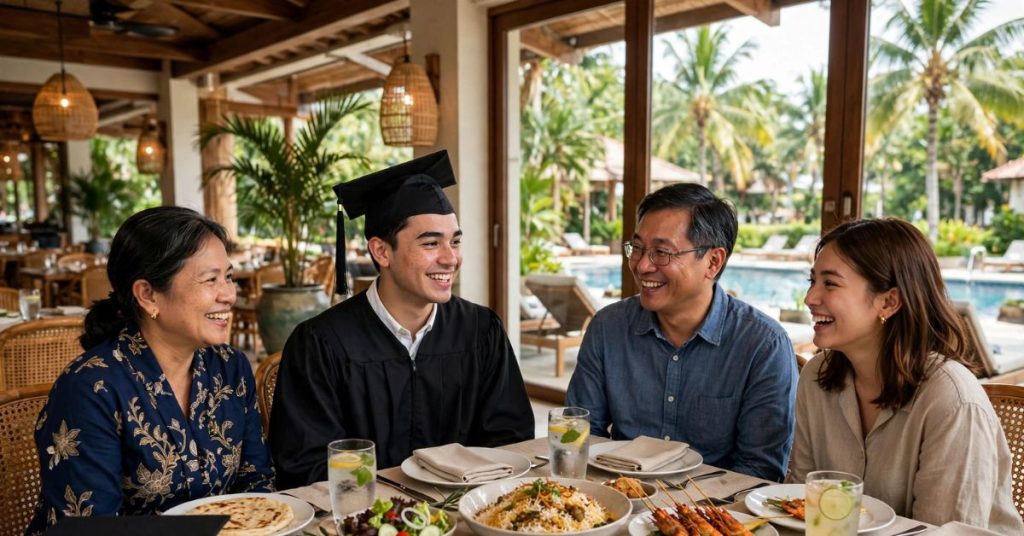
Choose food and a venue around your guests
Ask about dietary requirements with the RSVP, alongside mobility needs and whether guests require help getting to the venue. Clarify vegetarian requests and allergies individually rather than assuming one menu suits everyone.
For a larger gathering, Royal Palm’s celebration packages list Indian, International and Malay buffets, each with a minimum of 50 people. Match the package to your confirmed group size; for a smaller celebration, ask about suitable dining arrangements before making plans.
The published International Celebration Buffet menu includes mushroom soup, grilled honey mustard chicken and assorted pastries. Its package details also list a stage platform and a sound system with two microphones, which could support your appreciation segment. Confirm the current menu, equipment and event arrangements when enquiring.
The linked menus quote S$55++ per person, while the celebration page advertises packages from S$55. Request a final quotation covering applicable charges and agreed additions. Ask about access, seating, buffet service times and any arrangements needed for guests who cannot comfortably queue.
Create keepsakes that continue the conversation
Plan a small set of photographs with parents or guardians, mentors and friends, alongside the full group. Make sure older relatives can sit comfortably, and ask before posting anyone’s photograph publicly.
A simple keepsake can connect the celebration to what comes next. Write a card describing a lesson you want to carry into working life, or pair a graduation photograph with a personal message. Afterwards, send each supporter the picture that includes them. When their advice helps you through a first interview or a difficult week at work, tell them. That follow-up gives your thanks lasting substance.
Frequently asked questions
How long should a graduation thank-you speech be?
Aim for two to three minutes for one graduate. Choose a few specific memories and practise aloud so the message stays clear and comfortably paced.
Should parents and mentors be asked to give speeches?
Only if they want to. Invite them privately beforehand, explain the suggested length and offer the option of simply attending and enjoying the celebration.
How can we include someone who cannot attend?
Arrange a short call at an agreed time or send a personal video message afterwards. Ask permission before playing any recorded contribution to the room.
Do we need gifts for everyone we thank?
No. Personal letters, printed photographs and thoughtful conversations can express appreciation without stretching the celebration budget. Choose gestures that suit each relationship.