
A birthday buffet can look generous and still leave guests underwhelmed. The problem is rarely a lack of food. More often, the menu is too similar from one dish to the next, queues form around the most popular items, children have little they want to eat, or guests with dietary requirements are left wondering what is suitable for them.
The best birthday buffets solve those problems before the party starts. They combine familiar favourites with a few standout dishes, offer enough variety for different generations and make it easy for guests to eat at their own pace.
Build the Buffet Around Your Guest List, Not Just Your Favourite Foods
Before deciding between laksa, pasta or briyani, think about who will actually be eating.
A buffet for a child’s birthday should not be planned in exactly the same way as a 21st birthday dinner or a parent’s 60th celebration. Young children usually benefit from simpler foods they can recognise, while an adult celebration can accommodate stronger flavours and more adventurous dishes. Multigenerational family gatherings need the widest balance.
A useful approach is to divide the menu into four roles:
- Familiar favourites: rice, noodles, chicken, vegetables and other dishes most guests can comfortably enjoy.
- Celebration dishes: seafood, roast meats, BBQ items or other foods that make the spread feel more special than an everyday meal.
- Lighter choices: salads, vegetables, fruit and less-heavy dishes for guests who do not want a large meal.
- Desserts and drinks: enough choice to keep the celebration going after the main course.
This creates variety without filling the buffet with dishes that compete with one another.
Mix Local, Asian and Western Dishes for a Crowd-Pleasing Spread
One of the safest ways to impress a mixed group is to avoid building the whole buffet around a single flavour profile.
For example, a Singapore birthday buffet could pair local favourites such as chilli crab, Nyonya laksa or rendang with Indian dishes such as briyani and tandoori chicken, then add familiar Western options such as pasta, baked fish or roast chicken.
That combination gives guests freedom. Someone who wants something comforting can stay with rice and chicken, while another guest can explore seafood, curry or more distinctive dishes.
Royal Palm’s current buffet menus illustrate how this approach works in practice. Depending on the day, the spread includes combinations of Singapore chilli crab, Nyonya laksa, Nasi Padang dishes, briyani, tandoori items, Western mains, seafood and pizza.
Add One Interactive Food Station Guests Will Remember
A buffet becomes more memorable when at least one part of the meal feels like an experience rather than simply another tray of food.
Consider a Live BBQ or Carving Station
The smell and movement of freshly prepared food naturally draw attention. Satay, grilled meats, roast lamb or carved beef can become a focal point of the celebration.
The key is restraint. You do not need several live stations competing for attention. One well-chosen station usually creates more impact than adding another three standard dishes to the buffet.
Royal Palm’s Friday-to-Sunday dinner menu, for example, currently includes a poolside live BBQ with items such as kambing golek, chicken, satay, corn and sweet potato.
For private celebrations, its celebration offerings also list optional live concepts such as satay, carving and pasta stations, showing how interactive food can be incorporated into a larger event format.
Make the Station Match the Birthday
For a child’s birthday, a pasta or simple grilled-food station may be more approachable. For an adult milestone birthday, roast lamb or a carving station can create a stronger centrepiece.
The goal is not simply to serve food fresh. It is to give guests something to gather around and talk about.
Give Seafood a Special Place Instead of Treating It Like Another Main Dish
Seafood can instantly make a buffet feel more celebratory, but it works best when it has a clear role.
Rather than serving several similar seafood dishes, combine different textures and flavours. One rich dish, one grilled or peppery option, and one lighter preparation creates more contrast.
A Singapore-inspired seafood selection might include:
- Chilli crab with mantou as the showpiece.
- Black pepper prawns for guests who prefer stronger flavours.
- Baked or grilled fish as a lighter alternative.
- Mussels or lala for additional variety.
Royal Palm’s menus use a similar mix, with seafood selections that can include chilli crab, prawns, mussels, fish and other shellfish depending on the day.
Place seafood away from the main rice station where possible. This prevents guests waiting for seafood from blocking people who simply want to move quickly through the main buffet.
Create a Child-Friendly Corner Without Turning the Whole Buffet Into a Kids’ Menu
When children are attending, hosts sometimes make one of two mistakes: ignoring them completely or filling half the buffet with nuggets and fries.
A better solution is a small selection of straightforward foods alongside the main spread.
Pizza, mild pasta, grilled chicken, rice, fruit and simple desserts can satisfy younger guests without limiting what adults get to enjoy. Keep spicy sauces and condiments separate so parents can adjust dishes themselves.
Finger-friendly foods can also reduce waste because children can take smaller portions rather than receiving full plates they may not finish.
Make Dietary Inclusivity Part of the Main Plan
Food restrictions should be considered while choosing the buffet, not after the invitations have gone out.
In Singapore, halal certification can be especially helpful for celebrations involving Muslim and non-Muslim guests. MUIS administers halal certification in Singapore and provides a directory for checking halal-certified establishments.
Royal Palm identifies its buffet as halal and displays MUIS certification information on its website, making it relevant for hosts seeking a more inclusive celebration format.
Halal certification, however, does not automatically solve every dietary concern. Ask guests in advance about:
- Vegetarian requirements.
- Seafood or nut allergies.
- Gluten-related requirements.
- Other medically necessary food restrictions.
For serious allergies, confirm directly with the venue how ingredients are handled rather than assuming that a dish is safe based only on its name.
Turn Dessert Into a Second Highlight of the Party
The birthday cake already has an important role, so the dessert buffet should complement it rather than compete with it.
If the cake is rich and chocolate-heavy, include lighter desserts such as fruit, pudding, ice cream or traditional kuih. If the birthday cake is simple, the buffet can carry more indulgent choices such as brownies, cheesecake or pastries.
Variety in portion size is also useful. Small desserts allow guests to try two or three things without committing to a large slice.
Royal Palm’s current buffet menus demonstrate this type of dessert mix, with selections that may include cheesecake, brownies, Nyonya kuih, mango pudding, churros, fresh fruit and ice cream.
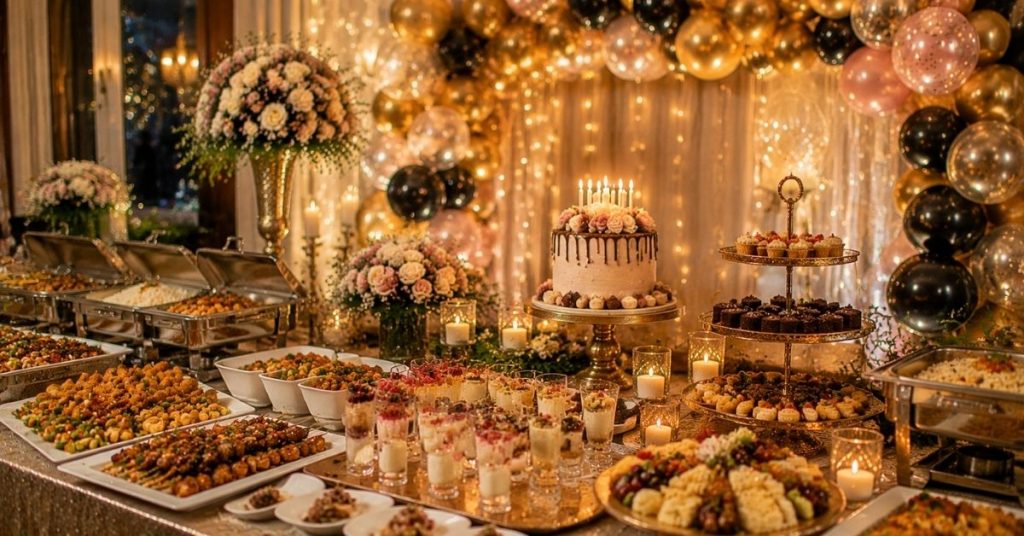
For the actual birthday moment, position the cake separately from the dessert buffet. It photographs better, gives everyone a clear place to gather for the cake-cutting, and prevents guests from helping themselves before the candles are blown out.
Design the Buffet Layout to Prevent Long Queues
Menu planning gets most of the attention, but poor buffet flow can affect the guest experience just as much as poor food choices.
Avoid putting everything into one long line if the space allows alternatives. Drinks, desserts and popular speciality stations can be separated from the main buffet so guests are not all competing for the same few metres of space.
You can also place plates at more than one entry point for a large celebration.
Think about the sequence from a guest’s point of view: plate, starter, staple, mains, vegetables and condiments should be easy to understand without people repeatedly moving backwards through the queue.
This is particularly useful for birthday parties where guests arrive at slightly different times rather than sitting down for a formal banquet simultaneously.
Coordinate Meal Time With the Birthday Programme
A common party-planning mistake is opening the buffet while speeches, games or performances are happening.
Guests then face an awkward choice: eat while something important is taking place or wait until the food has already been sitting out.
A better sequence is:
- Welcome guests and allow a short period for arrivals.
- Open the buffet and give everyone time to eat.
- Move into speeches, games or entertainment once the first rush has slowed.
- Hold the cake-cutting after the main meal.
- Leave dessert, drinks and socialising for the final part of the celebration.
This becomes easier when the venue and food service are planned together. Royal Palm’s birthday-event facilities include AV sound distribution, LED lighting, plasma TVs and a projector, which can support speeches, slideshows and entertainment alongside the meal.
Keep the Buffet Fresh Instead of Simply Ordering More Food
Generosity is important, but excess food does not automatically create a better buffet.
For longer functions, it is better to plan replenishment carefully than to put every dish out immediately. Singapore Food Agency guidance advises keeping catered food within its stated consumption window and notes that packing, transport and buffet setup time count toward the period food spends outside controlled temperatures.
For hosts, the practical lesson is simple: coordinate the meal timing with the caterer or venue instead of opening the buffet far ahead of your guests.
A freshly replenished spread looks more appealing, tastes better and usually produces less unnecessary waste.
Choose the Right Birthday Buffet Format for the Size of Your Celebration
Not every birthday requires the same setup.
A restaurant buffet works well when you want minimal planning and guests can simply arrive and dine. A private celebration package is more suitable when you need reserved event space, a stage, speeches, decorations or a structured programme.
This distinction is worth considering early. Choosing the correct event format can remove many logistical problems before you begin deciding on individual dishes.
A Great Birthday Buffet Feels Personal, Not Excessive
The most impressive birthday buffet is rarely the one with the longest menu. It is the one where every type of guest can quickly find something appealing, the standout dishes genuinely feel special, and the food fits naturally into the rest of the celebration.
Start with your guest mix. Build variety across cuisines and dietary preferences. Add one memorable live or premium element. Give children and lighter eaters sensible options. Then make sure the buffet layout, serving time and birthday programme work together.
When those details are handled well, food stops being something guests simply consume between activities. It becomes one of the experiences they remember from the birthday itself.
Frequently Asked Questions
What food should I include in a birthday buffet?
Include one or two staples, several protein choices, vegetables, lighter dishes, a few familiar crowd favourites and a varied dessert selection. For a mixed Singapore guest list, combining local, Asian and Western dishes usually gives guests more choice.
How many different dishes should a birthday buffet have?
There is no ideal number for every party. Focus on variety rather than quantity. A smaller menu containing different proteins, flavours and textures is usually more satisfying than a very large menu filled with similar dishes.
Is a halal buffet a good choice for a mixed group of guests?
Yes. A halal-certified venue can simplify planning when Muslim guests are attending while remaining suitable for non-Muslim guests. Always verify current certification and check separately for allergies or other dietary needs.
What makes a birthday buffet feel more special?
A live station, premium seafood dish, carving station, attractive dessert area or personalised cake display can create a memorable focal point without making the entire menu overly complicated.
Should I choose a restaurant buffet or a private birthday package?
Choose a restaurant buffet for a straightforward meal-focused celebration. Consider a private event package when you need dedicated space, decorations, speeches, entertainment, AV equipment or a more structured birthday programme.