A multicultural celebration can be one of the most meaningful events you host, but it can also go wrong in quiet ways. Guests may feel excluded not because anyone intended harm, but because the timing, food, entertainment, seating, language or venue setup assumed one “normal” guest instead of the real mix of people in the room. In Singapore, that matters even more because racial and religious harmony is treated as a core part of social cohesion, and multiculturalism is regularly described by the government as part of the country’s identity and way of life.
The good news is that Singapore gives organisers a strong foundation to work with. The Singapore Tourism Board highlights the country’s efficient transport, strong event infrastructure, and wide range of venues, which means good planning is usually less about finding possibilities and more about choosing the right combination of them. The real difference-maker is whether you design the celebration around guest comfort from the start instead of trying to patch problems later.
Start With Purpose, People and Boundaries
Before you think about décor or entertainment, decide what the celebration is meant to do. A multicultural family gathering usually needs warmth, flexibility, and space for children and elders. A corporate celebration needs smoother timing, clearer hosting, and broader dietary confidence. A community event may need a more visibly inclusive programme so no group feels like a side note. When the purpose is clear, every later decision becomes easier because you know what “success” actually looks like.
The next step is to define your guest mix honestly. In practice, multicultural planning works best when you stop thinking in broad labels and start thinking in real needs: who may need halal dining, who may be vegetarian, who may prefer an alcohol-free environment, who may need easier step-free access, and who may appreciate a programme that avoids inside jokes or references tied to only one culture. Singapore’s official accessibility and inclusion guidance makes the same point in a different way: plan early, identify accommodations early, and build them into the event rather than treating them as last-minute add-ons.
Questions to settle before you book anything
A simple planning conversation at this stage should answer questions like these:
- Which communities, age groups, and family types will be represented?
- Are there religious or dietary requirements that should shape the food strategy from the beginning?
- Will the event feel more comfortable as fully family-friendly, adults-only, or mixed with child-focused elements?
- Does the guest list include elders, wheelchair users, families with strollers, or guests who may need clearer wayfinding and seating support?
- Is the priority formal celebration, relaxed mingling, cultural sharing, or all three?
Those questions may sound basic, but they prevent the most common mistake in multicultural events: building a beautiful celebration that only fully works for part of the room.
Choose the Right Date, Venue, and Menu
Date selection is not just a scheduling exercise. In Singapore, it is smart to check the official Ministry of Manpower public holiday calendar before confirming your event window, especially because major observances such as Chinese New Year, Hari Raya Puasa, Vesak Day, Deepavali, and Christmas can affect guest availability, family commitments, and the mood of the season. Even when your event does not fall on a holiday itself, planning too close to a major observance can change how people travel, dine, or participate.
Venue choice should reduce cultural friction, not create it. Practically, that means choosing a space that is easy to reach, comfortable for mixed age groups, adaptable in layout, and supportive of different dining and programme formats. In Singapore, that is very achievable because the event ecosystem is mature and varied, and official accessibility standards are built around making spaces usable for persons with disabilities, older adults, and families with young children. A venue that already does this well will save you countless awkward workarounds on event day.
Food is where many multicultural celebrations either come together or quietly fall apart. In Singapore, MUIS is the authority that provides halal certification and regulates the halal industry, and it is the only body with legal power to issue halal certificates locally. That makes halal-certified catering one of the clearest and most trusted ways to create shared dining confidence when Muslim guests are part of the event. From there, you can make the menu even more inclusive by clearly identifying vegetarian, seafood, spicy, child-friendly, and allergen-sensitive options rather than forcing guests to guess.
For a Singapore example that fits this approach, Royal Palm @ Orchid Country Club positions itself as a halal-certified restaurant and event venue, describes its setting as resort-style with elegant indoor and outdoor poolside dining, and offers celebration buffet packages in Indian, International, and Malay styles starting from S$55 per person for a minimum of 50 guests. Its event enquiry categories also span weddings, corporate functions, birthdays, barbeques, and other celebrations, which is exactly the kind of flexibility that helps multicultural events feel easier to organise.
Shape a Program and Guest Experience That Feels Inclusive
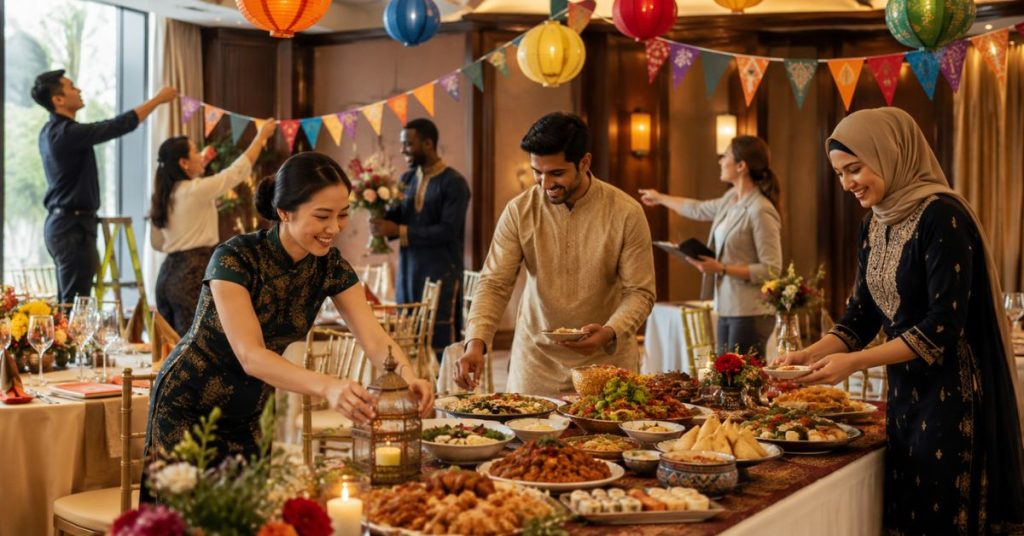
A strong multicultural celebration does not try to squeeze every culture equally onto a stage. Instead, it creates a shared rhythm where everyone feels seen and no one feels turned into a prop. The best programmes usually combine a welcoming common thread with a few thoughtful cultural touches: an emcee who frames the event with warmth and respect, music that reflects the room rather than one audience segment, and food or performance moments that invite curiosity without turning culture into costume. In Singapore’s context, where trust and acceptance across communities are explicitly treated as something that must be built intentionally, that difference matters.
For example, if you are hosting a company appreciation dinner, you do not need every team to “perform their culture.” A stronger format would be a short welcome that explains the spirit of the event, a menu wide enough that no one feels like an exception, table seating that mixes departments or families naturally, and one or two carefully chosen programme moments that celebrate shared values such as gratitude, hospitality, and belonging. That kind of programme tends to feel more generous and less performative.
The same principle applies to décor and symbolism. Use design details that feel respectful and grounded instead of tokenistic. If you are borrowing motifs, greetings, or ceremonial elements associated with a specific community, check them with someone from that community before locking them in. Multicultural celebrations feel elegant when they are curated with understanding, not assembled from stereotypes.
Manage the Day With Clear Communication and Accessibility
Clear communication is one of the simplest ways to make guests feel comfortable before they even arrive. Your invitation or RSVP form should not just ask, “Can you attend?” It should make it easy for people to tell you what they need. SG Enable’s inclusive events guidance stresses early planning and early accommodation, and that mindset works beautifully for multicultural celebrations too.
A useful RSVP or pre-event message should cover a few practical points:
- Dietary or religious requirements
- Mobility, seating, stroller, or wheelchair-access needs
- Whether the event is alcohol-free or family-friendly
- Dress expectations if any cultural sensitivity is involved
- Transport, parking, and the easiest arrival route
- Whether there will be a prayer break, a quieter corner, or special support for elders and children
When these details are handled early, guests arrive feeling hosted instead of uncertain.
On the operational side, brief your event team like hosts, not just service staff. The emcee should know how to pronounce names correctly. Ushers should understand seating sensitivities and mobility considerations. Caterers should know exactly how menu labels will be displayed. If older relatives, children, or VIP guests are involved, assign responsibility for them instead of assuming someone will “just handle it.” That kind of preparation is what makes a celebration look effortless from the guest perspective.
If your celebration is public-facing or more festival-like, do not overlook licensing. GoBusiness states that a Permit for Temporary Fair is required for temporary setups with makeshift stalls selling food, beverages, and/or goods, and that a Temporary Fair Stall Licence applies to food-handling stalls within those fairs. GoBusiness also states that, unless exempted, a public entertainment or arts entertainment licence is required for entertainment activities provided to the public. For private functions inside an established venue, requirements may be simpler, but it is still wise to verify early rather than assume.
The Best Multicultural Celebrations Feel Effortless
The best multicultural celebrations rarely feel “managed” from the guest side. They feel warm, smooth, and natural. That usually happens because the organiser did the difficult thinking early: clarifying the guest mix, checking the calendar, choosing a venue that removes friction, serving food people can enjoy confidently, shaping a programme that respects everyone in the room, and communicating clearly before the first guest arrives. In a society like Singapore, where multiculturalism and social harmony are treated as shared responsibilities rather than slogans, that kind of planning is not extra polish. It is the job.
For venues, caterers, and hospitality brands, this is also where business value grows. Guests remember the places that made mixed groups feel comfortable, not complicated. That is why venues such as Royal Palm @ Orchid Country Club are well positioned for this kind of event: the venue presents itself as a halal-certified restaurant and event space, highlights a resort-style setting, and offers Indian, Malay, and International celebration packages that align naturally with multicultural hosting in Singapore. As guest expectations keep moving toward inclusion, the venues and organisers that plan for comfort, dignity, and flexibility from the beginning will stand out even more.
FAQs
What is the first thing to decide when planning a multicultural celebration?
Start with the purpose of the event and the real makeup of the guest list. Once you know who is attending and what comfort, dietary, and access needs may be present, the rest of the planning becomes much more precise.
Is halal-certified catering the safest option for mixed groups in Singapore?
Very often, yes. In Singapore, MUIS regulates halal certification and is the only body with legal authority to issue halal certificates locally, which makes halal-certified catering a trusted baseline when Muslim guests are part of the celebration.
How do I avoid choosing the wrong date?
Check the official MOM public holiday calendar first, then think beyond the date itself to nearby family, religious, and festive commitments that may affect attendance and timing.
What should I ask on the RSVP form?
Ask about dietary needs, mobility or seating support, stroller or wheelchair access, and any other accommodations guests may need. SG Enable’s inclusive events guidance supports planning for accommodations early rather than reacting later.
Do I need permits for a celebration in Singapore?
If the event includes public entertainment or temporary fair stalls, you may need licences or permits. GoBusiness specifically notes permit requirements for temporary fairs, food-handling stalls within them, and public entertainment unless exempted.